
First Published October, 2016, in Vetscript.
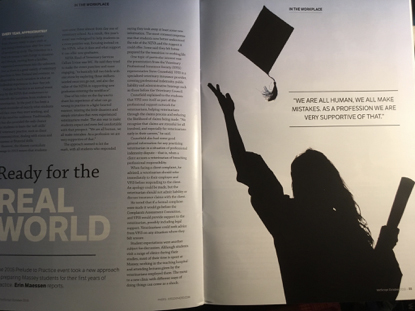
Every year, approximately 100 vet students graduate from Massey, ready to start work as practicing veterinarians after five years of unrelenting study. The transition into a first job means a vast change in situation and lifestyle, moving from a familiar, supported environment to one that is unknown. Just as there is a great variety of veterinary practices in New Zealand and overseas, so there will be much variation in what an individual experiences in their first job. Prelude to Practice is an annual event run by NZVA that endeavors to smooth the transition from student to veterinarian. In the past it has been a harsh reminder of exactly what students will face once they start working, and their need for resilience and fortitude. This year though, NZVA head of membership services, Sara Passmore, explains that the entire event has been redesigned to help students in a more positive way, focusing instead on NZVA: what they do, and what support they offer new graduates.
Student feedback from this year’s Prelude to Practice was generally positive, with all students who responded saying they took away at least some new information. The most common response was that students now better understand the role of NZVA and the support they can offer students, and some said they felt better prepared for the transition from student to working veterinarian. In the past, the Prelude to Practice event has been the only chance for students to learn the so called ‘soft skills’ of veterinary practice, such as client communication, dealing with stress, and business or financial skills. However the Massey curriculum change in 2013 means that students now cover these areas almost from day one of vet school. This allowed NZVA to shift the focus of the event, introducing their various branches and what support or information each provides. Callum Irvine, who was the MC on the day, explained that this year they tried to make the event, “Punchier and more engaging, to basically kill two birds with one stone – by teaching those skill sets needed once you go out, and also the value of NZVA.” He sees his role as being to share his experience of what can go wrong in practice: the little disasters and simple mistakes that even experienced veterinarians make. The aim is to make students expect and even feel comfortable with this. “We are all human, we all make mistakes… as a profession we are very supportive of that.”
One topic of particular interest to students on the day was the presentation from the Veterinary Professional Insurance society (VPIS) representative Steve Cranefield – something many felt they had no knowledge of previously. VPIS is a specialized veterinary insurance provider based within NZVA. Steve explains that VPIS see themselves as part of the professional support network for veterinarians, helping vets through the claims process and reducing the likelihood of claims being made; “We recognize that claims are stressful for all involved, and especially for veterinarians early in their career.” VPIS cover four basic areas: professional indemnity, public liability, administrative hearings such as before the veterinary council, and loss of documentation. Beyond this, Steve had some good general information for any practicing veterinarian in a situation of professional indemnity dispute – that is when a client accuses a veterinarian of breaching professional responsibility. When facing a client complaint, a veterinarian should refer immediately to their employer and VPIS, rather than responding to the client. An apology can be made, but the veterinarian should not admit liability or discuss insurance claims with the client. If a formal complaint is made, it will go before the complaints assessment committee (CAC), and VPIS will provide the veterinarian involved with legal support. Veterinarians may also seek advice from VPIS in any situation where they are unsure.
Although students visit a range of clinics during the programme, the majority of their time is still spent at Massey, working in the teaching hospital or having lectures given by the veterinarians employed there. Thus the move to a new clinic with different ways of doing things might come as something of a shock. The Massey clinic has BestPractice accreditation, a set of standards governing the service, equipment, and facilities of a veterinary practice. Because of this, students tend to leave Massey with expectations as to how a clinic will operate, and what facilities will be available, which will not necessarily be met in the first practice they work for. Additionally, a BestPractice accredited clinic must have a specific programme for supervision and support of any new graduates, aimed at developing their competency in simple procedures, and providing them with back-up while on duty. These systems make it easier for new grads to become confident in a working role, while employers can be confident that their young vets’ skills are up to standard.
In order to attract new graduates, a practice might consider offering a similar support programme, even if they are not an accredited clinic. Students at Prelude to Practice identified a wide range of skills they wished to become more competent with, including technical skills; pharmacology and responsible drug use; client communication and dispute management; and business or management skills. Even for routine procedures and basic surgery skills, students come out of Massey with limited experience, and it is in their first few years of practice that they will fully develop these skills, and set lifetime habits. This makes their experience in the first few working years particularly important. The most attractive first job would offer good support systems and the opportunity to develop routine skills. Many students have also expressed the desire for support in reducing stress and maintaining good mental health, and this is a role that could potentially be filled by the practice at which they are employed.
NZVA has identified the last two years of study and the first three years of working as the stage in which veterinary students are most vulnerable and in need of support. In order to increase their positive impact on new vets, NZVA has recently developed the emerging leaders programme. The aim is to provide both professional and collegial support to new graduates within a formal network. The forum would be largely self-maintained; keeping costs low that would otherwise be prohibitive to the involvement of debt-laden graduates. Currently students receive free membership to NZVA, but this stops once they reach graduation, with the result that 70% of vets are not NZVA members during these early years, when finances are tight and they tend to be unaware of the benefits they could receive. Hence the new system will be more successful if costs are small. As well as creating connections between both practicing veterinarians and undergraduates, the emerging leaders programme will provide an opportunity for young vets to have their skills enhanced and their voices heard. The veterinary profession as a whole can benefit from having the influences and opinions of its newest members expressed. Once the emerging leaders programme has finished review it will be launched in 2017.
Just a few short months from now, another batch of brand-new veterinarians will leave Massey and start work for the first time. This will be a period of great upheaval, but at least they now have a better idea of what to expect once they get out into the real world.
 Erin Marieke Maessen
Leave a comment