
This is the latest installment of my lockdown- induced exploration of the insects in my garden. As well as thinking about what creatures might be hiding in the garden, I’ve been looking at ways to attract more beneficial insects, and as a result this set of pictures includes a couple of projects. Maybe these could help to pass the time while we’re still staying mostly at home.
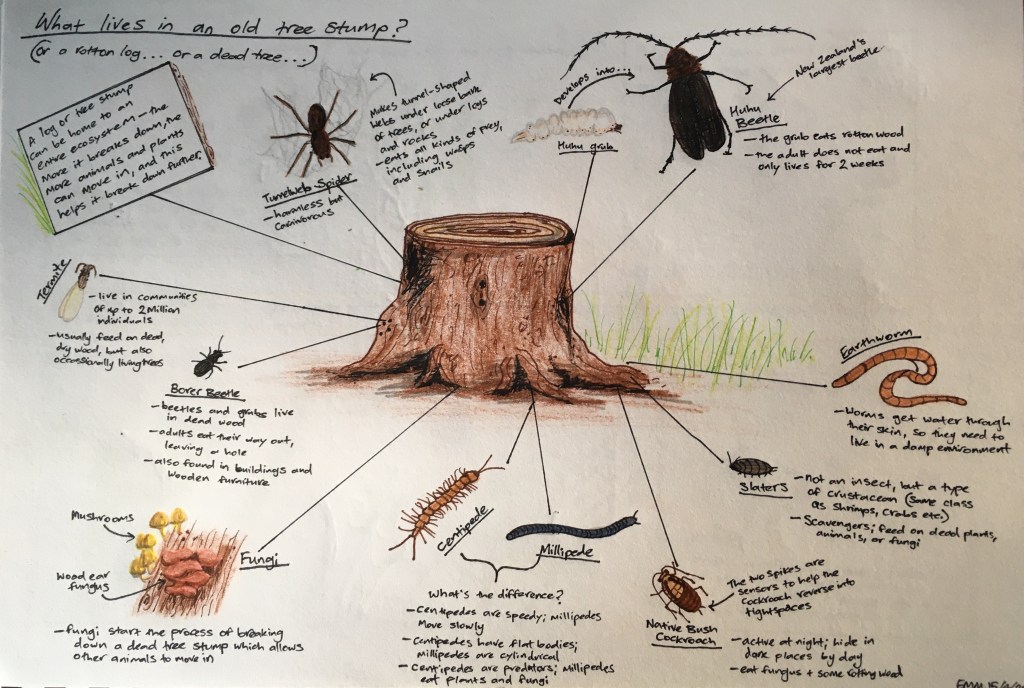
An old stump, log, or other piece of wood left undisturbed will gradually break down, and as it does will provide a home for many types of creatures. Lichens, mosses, and fungi will usually move in first, and make the log more hospitable to insects. Some (like termites and beetles) will create their own holes or tunnels to live in – others (like tunnel-web spiders) will move into spaces left by other creatures, such as under loose bark.
You can build your own bug house, which provides a home for many of the same creatures as you would find in the tree stump. Over time, your bug house will rot away, and this means the species which make use of it will gradually change.
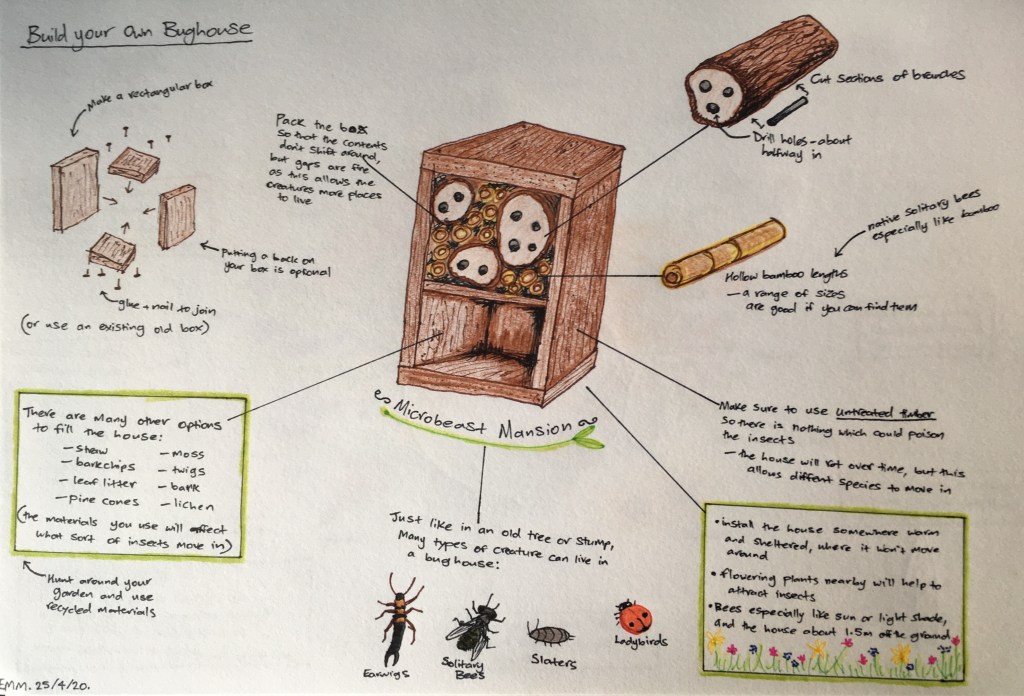
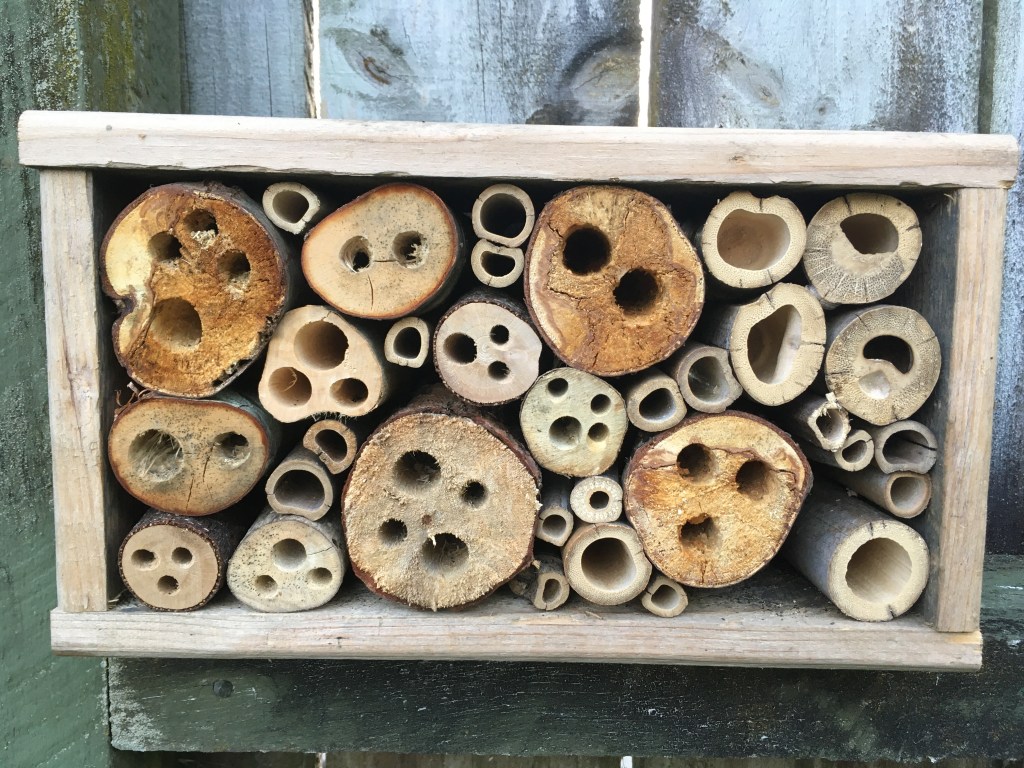
One type of insect that might be attracted to your microbeast mansion are solitary bees. This includes 28 species of native bees, which are smaller than a honey bee, and usually black and furry. The native bees don’t make honey, but they are important as pollinators; they are also non-aggressive with only a mild sting, so won’t cause a nuisance in your garden. Solitary bees usually live in holes, so will most like a bug house filled with cut lengths of bamboo or logs with holes drilled into them as shown above.
To attract solitary bees it’s best to place your house somewhere sunny, where it won’t get damp and mouldy. It’s also a good idea to limit yourself to one type of ‘bedding’ within the house, as each type will suit different species, which might not benefit from living in close proximity to each other. If you want to cater for different species or try out some of the other bedding options, you could make several separate houses, and set them up in different places around your garden.
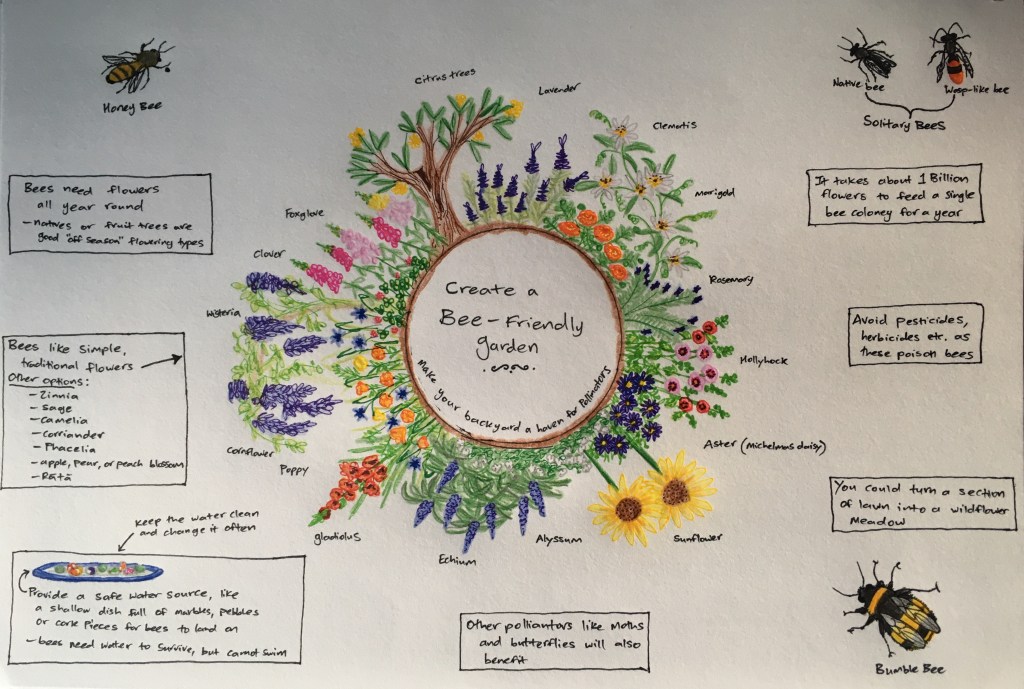
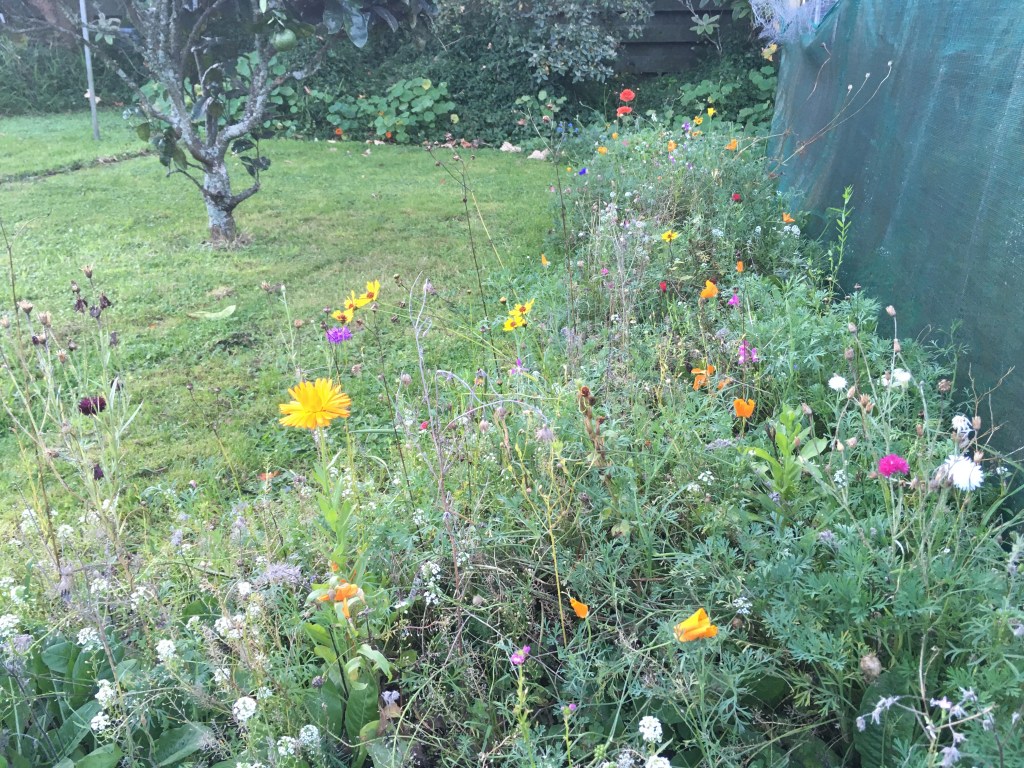
To attract tenants to your microbeast mansion, and provide food and safety to other beneficial insect species as well, you can make your garden more bee-friendly. Both solitary bees and honey bees will benefit from having a safe place to live, and plenty of flowers for food. You might also see an increase in other species, such as butterflies and moths, which are useful pollinators too.
*Once again, some of the information and inspiration for the images above was thanks to “Which New Zealand Insect” By Andrew Crowe (2002). For more information about bees and how to attract them to your garden, visit https://www.fortheloveofbees.co.nz/
 Erin Marieke Maessen
Leave a comment