
First Published March 2020, for LIVE magazine. View the original article in the Autumn edition of LIVE here.
It isn’t much to look at, a few exotic trees overlooking a grassy track and slightly stagnant waterway, but Dean Park has new significance hosting five of the 1,200 traps located throughout parks, reserves, and green spaces across urban New Plymouth. Prior to May 2018, the New Plymouth District Council (NPDC) was maintaining just 180 traps. Then the government pledged $11.7 million to help launch Taranaki Taku Tūranga, Towards Predator-Free Taranaki, an ambitious project larger than any landscape-scale predator-free project to date. Chauncy Ardell of the Taranaki Regional Council (TRC) leads the urban trapping programme. He explains that they were unsure what could be achieved, but aimed to get traps out to people and see what happened. Chauncy is more focused on the long-term sustainability of the project than with meeting the national goal of a predator free New Zealand by 2050. Removing predators and restoring urban biodiversity is not an endpoint but an ongoing process.
To control predators effectively, the goal is one in five households actively trapping – in New Plymouth, that’s around 5,000 households. TRC hopes to reach this number within five years, and 18 months in are well on their way, with an estimated 3,500 households taking up backyard trapping so far. This is alongside the growing network of traps in non-residential spaces such as the hospital grounds. Getting large businesses on board would allow the network to extend into industrial areas in Waiwhakaiho and Bell Block, “and it’s a good green marketing thing for them”, explains Chauncy.
Currently, TRC pays contractors to check the traps on public land each month, but eventually responsibility will be handed back to NPDC, or, preferably, the local communities. NPDC volunteer coordinator Laura George is in charge of linking willing locals with trap lines to adopt.
This underlines how reliant outcomes are on public uptake: “you can’t go on throwing money at a project year after year if you don’t get the buy in from the community”. However, feedback has been “almost unanimously positive”. Trapping could be just a start, encouraging locals to take ownership of local spaces, weeding and planting trees. “It’s that snowballing effect of people taking that interest, that love of their community and the special places within it.”
The public seems full of enthusiasm for a Taranaki where native plants and animals can flourish, and school children are among those leading the way. TRC’s subsidized traps are available for sale from around 20 schools throughout the region, and Chauncy and TRC environmental educator Emily Roberts work with schools to help students learn about the project and set up their own trap lines.
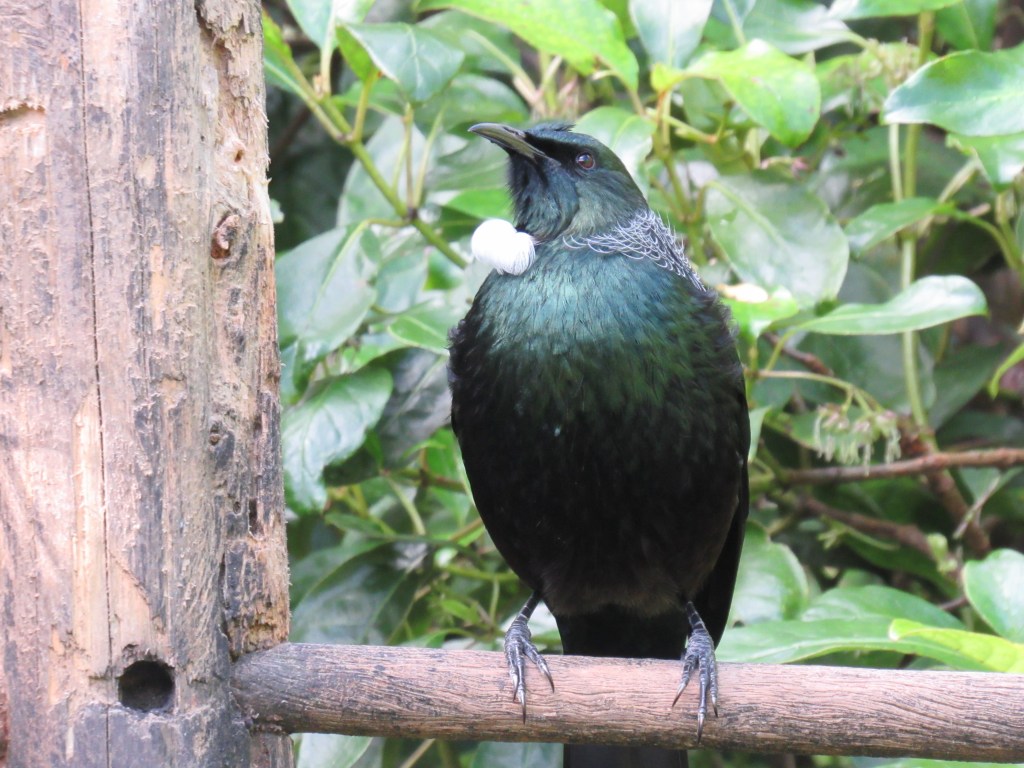
What might that restored environment look like in New Plymouth? It means even small spaces – like Dean Park – becoming thriving habitat for native wildlife. It means rare species currently only seen in bush remnants spreading into the city, birds like tomtits or kākā becoming a normal sight because they can nest safely without predation. “I think there’s a lot of potential for these places to start hearing species coming back there that we haven’t heard for a long, long time”, explains Chauncy.
In the 18 months the project has been collecting data, Chauncy estimates there have been 2,000 kills – mostly rats, plus around 30 stoats. Most of the stoats were caught near the Waiwhakaiho river mouth, a nesting site for many birds: “just last week we found there’s a pair of New Zealand Dotterels nesting down at the Waiwhakaiho river mouth, which is a first”. Hopefully dotterels are the first of many rare and precious species that will be able to return to the region as the project progresses.
For more information about Taranaki Taku Tūranga – Towards Predator-Free Taranaki, or to get involved, check out www.trc.govt.nz/pf-taranaki2050


Awsome news about preditor trapping in urban areas,which usually get overlooked yet can be home to prolific numbers of preditors like rats mice and stoats. I would like to find a way to prevent domestic animals from predation on birds in local gardens, my own pes included. we do have food food and necter place very high where cats find it too difficult to get to. I wonder if aluminium around the trunk would stop a cat being able to climb? A well fed cat is not going to hunt for food but still has the hunting instinct and may do it for “fun”. Any ideas welcome.
LikeLike
Oops noted some typos inmy comment, Pets not ” pes”/ bird food not ” food food”./ placed not “place”
LikeLike
That’s a good question- and a difficult one. I’ll see what I can find out, but I would guess that aluminium would help to stop cats climbing. Predator proof fences have a sloping hood on top to stop cats and other climbing animals getting over, so the same thing could work on a tree. If there are other trees, fences etc close by the cat could jump across though so I’m not sure how practical it would be. Probably the best thing you can do is to keep your cats inside at dawn and dusk, as those are their main hunting times, and also very active times for birds.
LikeLike
At the moment, the Restore Taranaki initiative is working on ways to raise awareness about the impact cats have on native wildlife, and to promote responsible cat ownership.
There is some discussion about whether New Zealand should follow the example of Australia, which has much stricter legislation for cat owners – like having compulsory ‘curfews’ to keep cats inside at night. I’ve also heard of cats in Australia sometimes having outdoor areas that are enclosed in mesh, the idea is mainly to keep cats safe I think, but it would also keep birds safe from the cat. Obviously that’s a more extreme solution though, and I’m not sure if it would take on in New Zealand at least not at the moment!
LikeLike