
Lockdown has been lifted, but there is still plenty going on in the world of backyard microbeasts. This latest installment is a collection of miscellaneous garden beasts and some more specific information about the biology of a few of these creatures – and if you read to the end then you’ll see some of my favourite of New Zealand’s weird, rare, microbeast species.
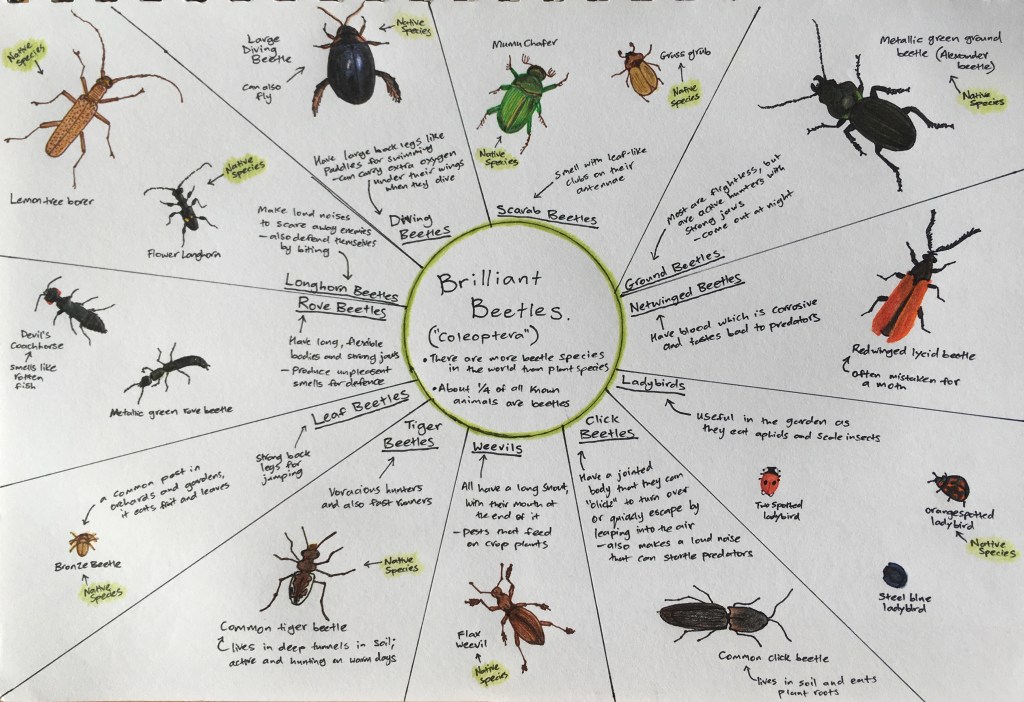
Of all the insect groups, the one with the most species is the beetles. Just within New Zealand we have a huge range, and I’ve only been able to showcase a tiny number of these here. Some of these – like ladybirds, weevils, and click beetles – are fairly common and will probably be living in your garden. Others, like the lycid or tiger beetles, will be harder to find. Be warned if you decide to go on a beetle-hunt: many of these species have strong biting jaws with which to defend themselves against your giant fingers.
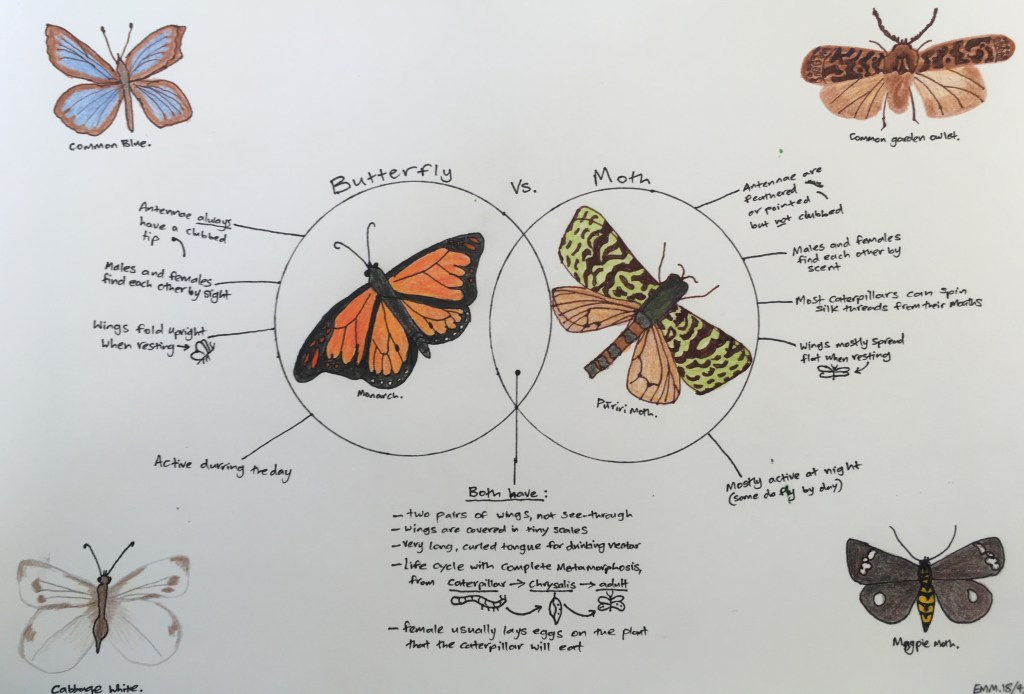
Beetles might have the most species, but some of the most obvious and easy to spot insects in the garden are butterflies. Butterflies and moths belong to the same insect order, Lepidoptera, but have some significant differences.
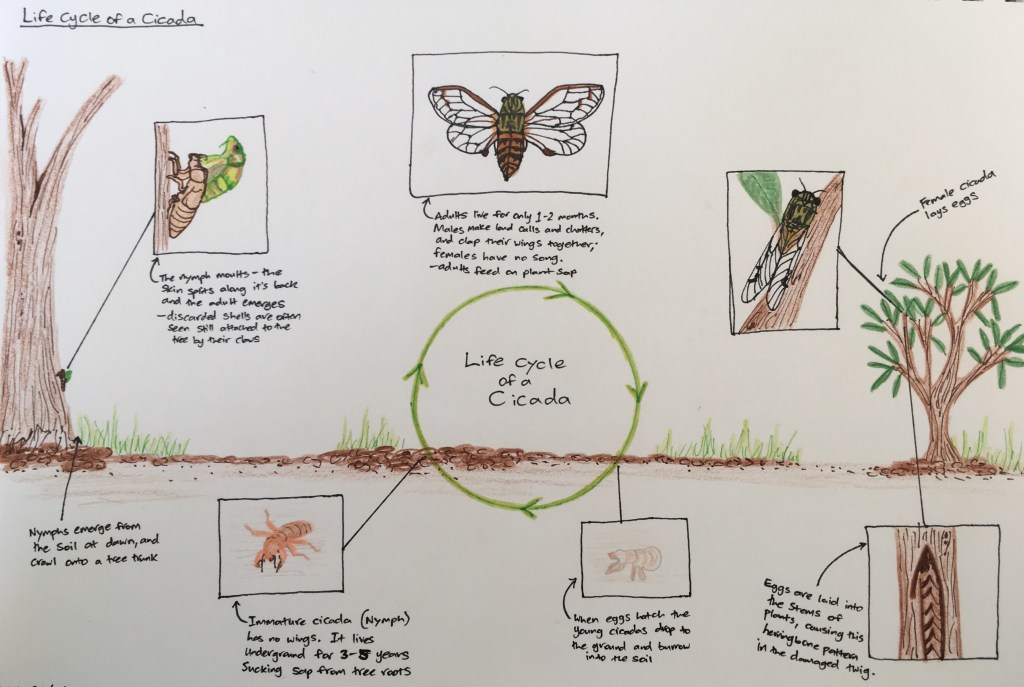
Another noticeable group are cicadas, which make themselves known, in summer at least, by their loud chirping/buzzing/droning song. Their lifecycle is quite fascinating – before they get to singing, cicada nymphs live underground for several years, before emerging and hatching out as adults, leaving their distinctive crispy brown shells behind them. In summer these shells are usually easy to find on tree trunks and other surfaces.
Much as I have enjoyed drawing the insect species in my own backyard, I was disappointed not to be able to include some of my favourite weird creatures in my previous pictures – so I decided to do a special edition for those species that you are not likely to find in your garden at home. Some of these species are endangered, and some are restricted to very small or specific areas of habitat. I haven’t seen all of these species in the flesh – yet.
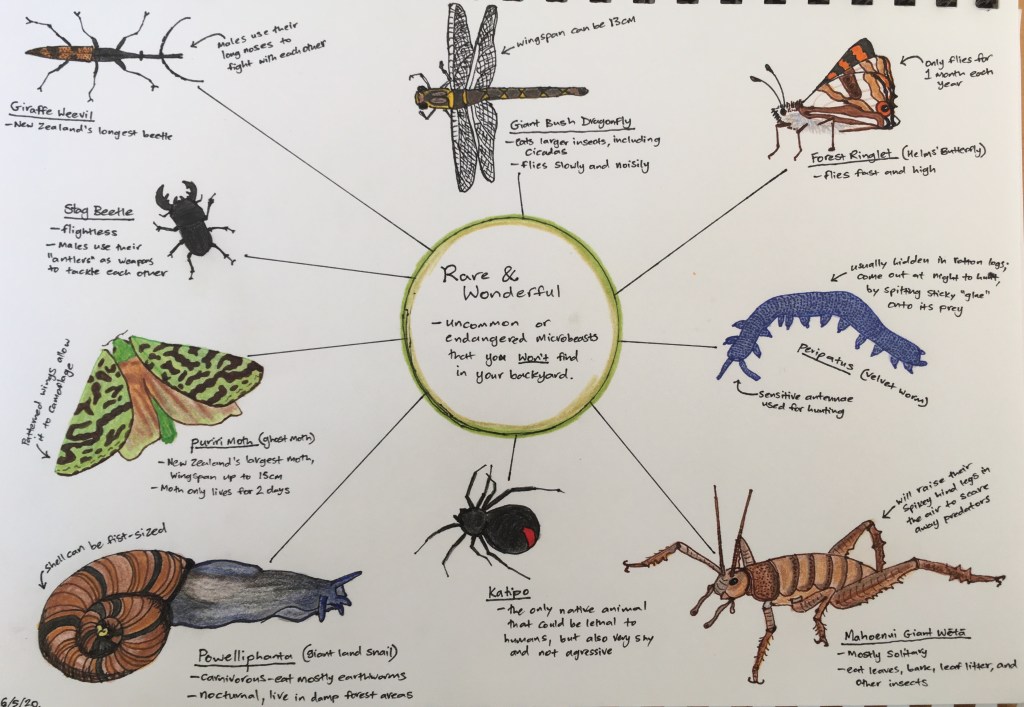
A few years ago I went on a field trip to see the Mahoenui giant wētā, in a patch of gorse bushes somewhere between Awakino and Piopio. This is the only area of protected gorse in the county, because the dense prickly bushes protect the giant wētā from predators like rats and possums. Wild goats are also protected in this one specific reserve, because their browsing on the gorse helps stimulate regrowth. The wētā are difficult to spot because they camouflage well – you have to look for a while before your eyes ‘tune in’ to spotting the curved shape of wētā in amongst the spiky gorse. Wearing thick gardening gloves, I was allowed to have one of these giants sit gently on the palm of my hand. They are surprisingly heavy – and much more docile than the smaller, feistier tree wētā in the garden at home.
Because the area is so vulnerable to fire, giant wētā have been translocated to three other sites besides Mahoenui. According to the Department of Conservation, there are also plans for a captive breeding programme in future.
As usual, some of the information and inspiration for the images above was thanks to “Which New Zealand Insect” By Andrew Crowe (2002).
 Erin Marieke Maessen
Love these pictures, and finding microbeasts in my garden.
LikeLike
Great work Erin , how do you get time to do the house work ?
LikeLike
Oh Peter if I didn’t know you’re joking with Erin I’d slap you for being a chauvinist! Hahaha.
LikeLike